Research Areas
Centre for Intelligent MachinesAutonomous navigation, robots that learn, foundation models for robotics, mobile robotics, machine learning, telecommunications and 5G/6G network optimization, robot localization, information summarization, human-robot interaction, sensor-based and multi-robot systems, computer vision, marine robotics, self-driving vehicles, and recognition.
Mobile Robotics Lab
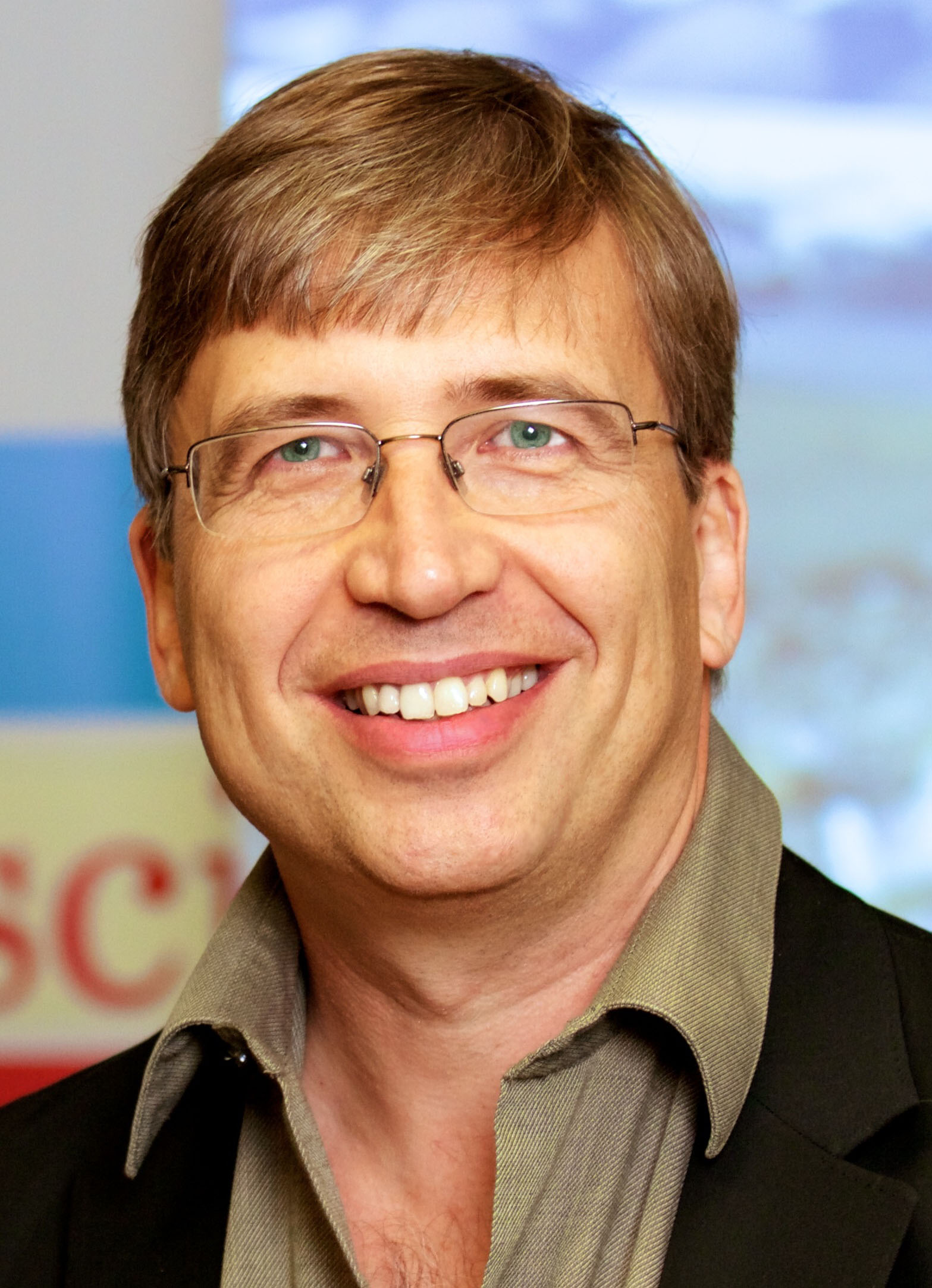
Research DirectorMcGill's Mobile Robotics Lab designs novel field and marine robots, creates learning-based controllers, and studies how robots interpret and explore their environments.
Explore ongoing projects, student work, and publications at cim.mcgill.ca/~mrl.
Contact
Email (human-friendly): gregory.dudek [at] mcgill [dot] ca
PGP public key: available here.
Affiliations: Centre for Intelligent Machines; Mila (Quebec AI Institute); IEEE Fellow.
Office
Centre for Intelligent MachinesMcGill University
McConnell Engineering Building, Room 440
3480 University Street
Montreal, QC, Canada H3A 2A7
Publications
Full, up-to-date list: publications by topic.
Selected publications across my career+
A cross-section of selected publications across my career. A more comprehensive and current list (with on-line versions) is the publication list by topic; see also the (less current) Mobile Robotics Lab publications page.
- One of the early applications of LLMs to robotics: we used a foundation model to create a photo-acquisition robot that adapts across domains via an LLM that produces domain-specific criteria and evaluation metrics. Followups call this a photobot, though earlier (pre-LLM) work introduced the more general "photo documentarian" idea (final ICRA 2023 version).
- Prediction of 5G traffic on edge compute via transfer learning with a technique we call Similarity-based Elastic Weight Consolidation — One for All: Traffic Prediction at Heterogeneous 5G Edge, IEEE Globecom 2021 (best-paper award, GlobeCom 2021).
- "Generating adversarial driving scenarios in high-fidelity simulators" uses adversarial methods to improve autonomous driving agents — an early example of robustifying agents by making the environment part of the learning cycle (ICRA 2019 paper).
- Efficient methods for drivers to meet one another or passengers — Fast and Efficient Rendezvous in Street Networks, IEEE/RSJ IROS 2016.
- Searching for novelty in video to navigate a swimming robot toward maximally informative observations — Autonomous Adaptive Underwater Exploration using Online Topic Modeling (journal version in Intl. Journal of Robotics Research, 2013).
- Human-robot interaction (HRI) and dialog, validating HRI methods (2011).
- Graphical state space programming (2009–2011): GSSP material and code — a framework for lightweight robot controllers.
- Visual barcodes as variable-resolution fiducial targets: Fourier tags and an enhanced payload variant (2011).
- Inferring the topology of sensor networks from sparse event information: ICRA 2006; see also our 2010 IEEE Transactions on Robotics article.
- Recommender-system work with a large user-generated tag base: WI 2003.
- Comparing PCA to landmark-based pose estimation: IJCAI 2003.
- Using visual landmarks for pose estimation: CVPR 2001.
- Reconstruction of depth images from intensity data: WACV 2002.
- Multi-robot collaboration for robust exploration: Annals of Mathematics and AI, 2001.
- Learning landmarks for pose estimation: ICCV 1999.
- Taxonomy for multi-agent robotics and survey: Robot Teams (2002).
- Global localization: "Localizing a Robot with Minimum Travel," SIAM J. Comput., April 1998.
- Localization from sonar models: compressed postscript.
- Just-in-time sensing from sonar and laser data: ICRA 1996.
- Classification and use of sonar landmarks: IROS 1997.
- Computing "shape texture" for recognition: compressed postscript.
- 2-D shape-from-darkness and hidden surface recovery: IROS 1995.
- 3-D shape-from-darkness with iterative carving: CVPR 1998.
Talks & Media
Video highlights+
- Interview — "Dudek on robots in depth" (robotics and marine robotics).
- The future of robotics according to Dudek — one-minute clip.
- Aqua robot "dancing" — Aqua robot dance.
- Short biography (French) for the OCTAS award — biography video.
- Three-minute introduction to Gregory Dudek and the lab — quick intro for undergraduates.
- Bravo 2011 honorees (including Greg Dudek) — 30-second highlight.
- TEDx talk on robotics and finding interesting things automatically — TEDx talk.
- Fully autonomous vision-based airplane flight (UAV) — Xu & Dudek.
- Learning how a carpet "feels" for a Roomba — unsupervised learning demo.
- Robotics research video for the G20/G8 summit — summit video.
- Hovering gait for the Aqua robot — hovering gait demo.
Teaching
COMP-598 (Fall 2026) — Topics in LLMs, foundation models and robotics
A graduate + undergraduate seminar on advanced methods in LLMs and mobile robotics.